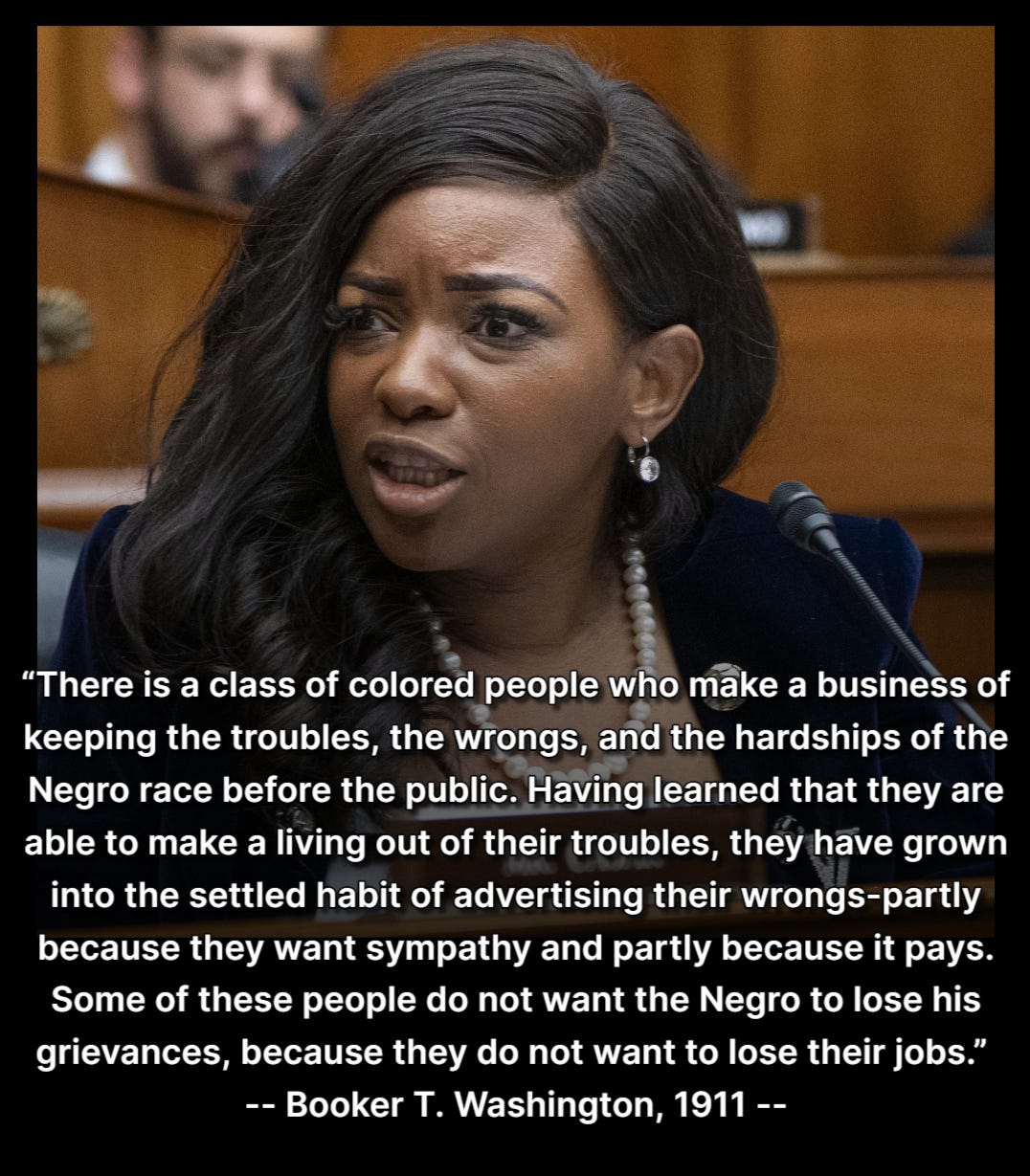
Against the Cult of Low Expectations
A Personal Reckoning with Cultural Decline

When I was young, it seemed many Blacks believed it was our birthright to work—deliberately and without apology—toward progress in education, economics, and society. Not perfection. Not utopia. Progress. The unglamorous kind that required discipline, delayed gratification, and an unspoken agreement that standards mattered.
Somewhere along the way, that belief inverted.
As I grew older, it seemed many Blacks came to believe it was our birthright to deny ourselves progress in education, economics, and society—while still demanding the rewards of having achieved it. Effort became suspect. Aspiration became arrogance. Competence became betrayal.
Now, it often feels like we’ve entered a third phase altogether: one in which many will fight tooth and nail to destroy any progress any of us manages to make.
That may sound harsh. It is meant to be accurate.
This isn’t about denying the existence of gross injustices. Those are real, persistent, and corrosive. But injustice alone does not explain the deliberate inversion of values that has taken root—where failure is excused, dysfunction is defended, and anyone who refuses to participate in the ritual is treated as an enemy.
To speak proper American English is dismissed as “talking white.”
Which is odd, given that daytime television and social media have spent decades proving that incoherence and intelligence are not racially exclusive.
To be effectively educated is to be lampooned.
To be unserious is to be embraced.
To demonstrate discipline is to be accused of selling out.
To wallow publicly is to be affirmed as “authentic.”
Somewhere, the bar didn’t just lower. It was dragged into the basement and guarded like a sacred relic.
This didn’t happen by accident.
It happened because standards make demands. And demands make people uncomfortable—especially when those demands come from someone who looks like you and refuses to make excuses on your behalf.
External oppression is easier to rail against than internal accountability. The former requires outrage. The latter requires change.
So the language shifted.
Ambition became “elitism.”
Structure became “oppression.”
Self-command became “internalized whatever.”
And in that vacuum, a strange cultural consensus emerged: that the worst thing you could be is better than your circumstances. Better than the narratives.
I’m not naïve enough to believe this represents everyone. It never has. But it is loud. It is protected. And it is enforced socially with a ferocity usually reserved for heresy.
Which brings me to language.
I use certain words deliberately—niggaz, wiggaz, homie don’t play dat—not because I live inside them, but because pretending they don’t exist is dishonest. They are part of the cultural shorthand. They signal affiliation. They test loyalty. They are often deployed as weapons to determine who is “with us” and who isn’t.
I don’t hit people up.
I don’t holla at niggaz or bitchez.
I’m not “on some shit.”
That isn’t virtue signaling. It’s not “code switching”. It’s boundary setting.
I don’t deny anyone their inalienable right to pursue happiness—however they define it. But I am not obligated to accept, celebrate, or embrace what makes someone else happy if it rests on anti-intellectualism, self-destruction, or performative grievance.
Pluralism cuts both ways.
If someone is content living without standards, without discipline, without forward motion—fine. That’s their life. But the expectation that everyone else must lower themselves in solidarity is not moral. It’s coercive.
And that coercion is increasingly dressed up as cultural loyalty.
What’s most disheartening is not that progress is uneven. It always has been. It’s that we’ve reached a point where many seem to expect—and even engineer—the worst of themselves and each other. Not reluctantly. Actively.
Mock the student.
Distrust the competent.
Undermine the disciplined.
Then point outward and ask why nothing improves.
I reject that script.
I am not a mascot.
I am not a demographic talking point.
I am not a walking apology or a collective guilt sponge.
I am an individual.
Not a race.
Not a hyphen.
I am a Son of the Soil—rooted, accountable, and unwilling to outsource my dignity to group pathology or ideological fashion.
That stance will offend some. It always has. But offense is not a counterargument.
Progress—real progress—has never come from celebrating our lowest common denominator. It has always come from those willing to stand apart, raise the standard, and absorb the backlash that follows.
If that makes me suspect, so be it.
Homie still don’t play dat.
I mean doesn’t.
—